
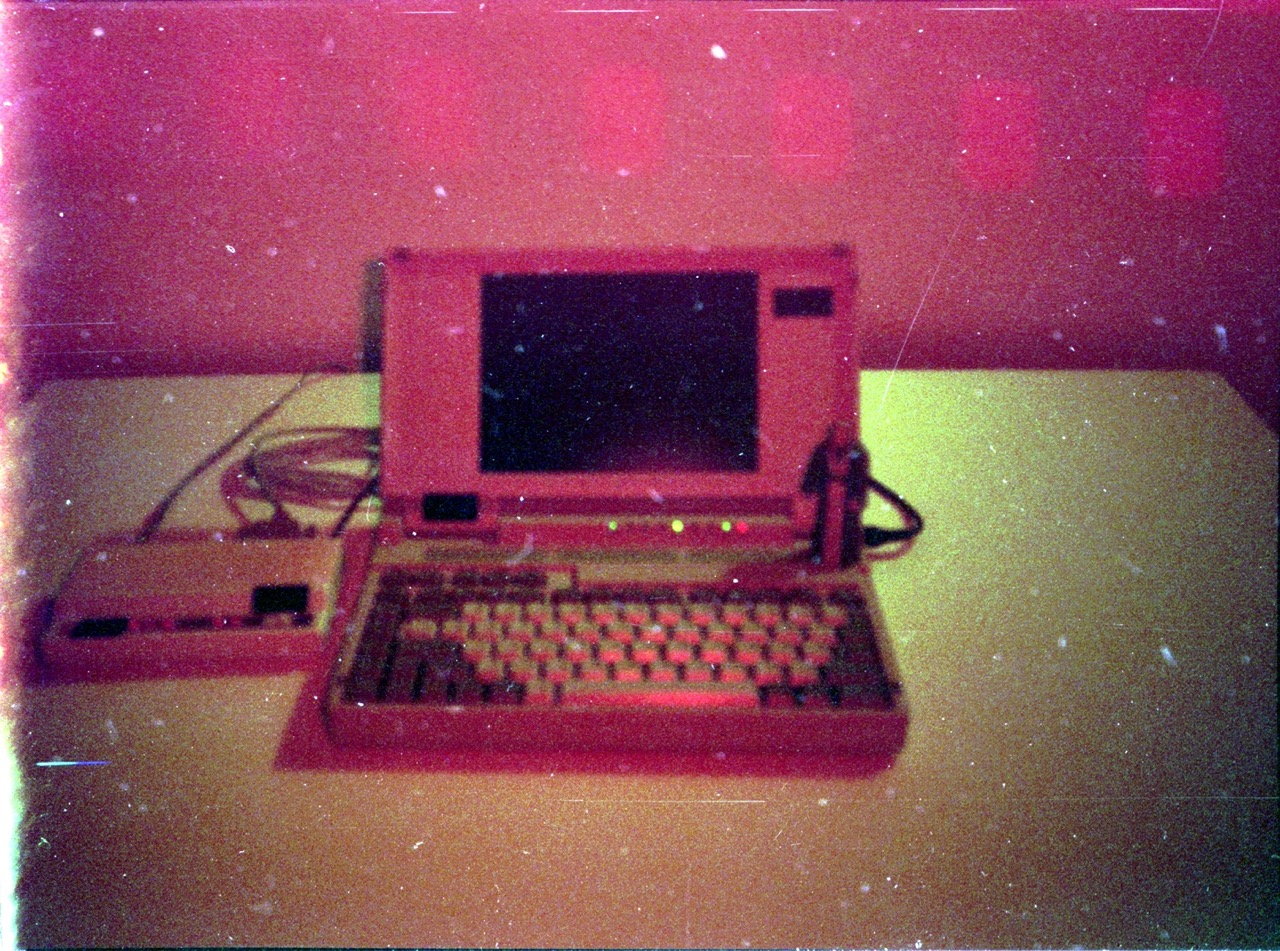
It’s a good candidate since it sounds like there’s no precision mechanical components like there would be in a hard drive. Does anyone have ideas for how I’d go about this? Is there a barrier I’m not considering?
I know how to make basic semiconductors already, so that’s not an issue.
Edit: I’ve got an answer written down in the comments now. TL;DR you’d still need lithography to do it the OG way, because of the patterned magnetic material that directed bubbles around the medium, but material requirements are actually pretty flexible.
Just from a quick Google search, it looks like it’s similar to tape memory, except the data moves along the tape, instead of the tape moving over the reading head. According to diagram by TI, it looks like the bubbles are on some iron wafer and forcibly moved around by two coils. Then, on a second substrate there are some type of read & write head.
So here’s how I would go about this: first, I’d wrap some small metal plates in insulated magnet wire, place two permanent magnets on the top and bottom (sandwich style) and stick a read head on the edge of the plate. Then you push AC current through the two coils offset by 90 degrees. This should push the bubble in a circle, and that can be read by the tape head.
Keep in mind though, this is a complete guess based on a simplified diagram from the 70s. I don’t actually know if this is how they work.
Do you understand the physics of the bubble itself at all? I’m a bit unclear on how a this pushes around domain walls in the first place. Like, it makes a kind of sense, electrons hold spin and they’re moving, but the actual physical rate at which they do that is pretty low for even large currents. I take it it’s a magnetic field itself that moves them based on what you wrote? How does that not erase anything?
It does look like two big coils in the diagrams. I wonder if the edge of the wafer was kept “empty” for bubbles to move in and out of, then.
I only vaguely really know what’s going on. I did some more research after commenting, and I think I understand a little bit more. The TI bubble memory has two separate layers. On of them, the ‘magnetic epitaxial film’, basically has a lot of magnetic molecules arranged to point in the same direction. The second layer has circles made of some nickel-iron alloy. What I think is happening is that the actual magnetic bubbles are held on the film, and the iron circles act as tracks the bubbles are pulled along. I don’t think electrons in the bubble are actually moving, but I think the electron spin is. That would explain why the loops are capable of moving the bubbles faster than electrons.
Hmm. I’ll keep researching too. Thanks for the help.