• 14 Posts
  • 65 Comments
Joined 3 years ago
cake
Cake day: June 21st, 2023

help-circle
  • I would have the top level tag “Rulebook” and put “Core Rulebook” as a sub-tag. Under Rulebook also have “Player Handbook”, “GM handbook” and “Splatbook”. Keep the rules together.

    Also tags for your dominant systems (ex DnD, PbtA) including “System Agnostic”. Perhaps add subtags “Pre-made” and “Generators” under “Setting”. Publisher tags? Language? Decade/year of release? Have played?


  • Both my favorite systems makes my GMing job easier and they do it in the same way - they give the players responsibility though their character’s goals to drive the game forward. And they have explicit rewards helping in this matter.

    Ironsworn (a PbtA) is the more direct of these. The characters swears vows and once they are fulfilled they get XP. Starforged, the SciFi version, adds more ways to earn XP through Bonds and Exploration. But we’ll stay with the base Ironsworn. The vows are essentially quests but what makes them different from just any random quest is the mechanics surrounding them. First a tracker to measure vow completion is created, then as progress is made it is filled depending on vow difficulty. Now this sounds fairly standard except the only way to mark progress is through triggering moves, primarily the move “Reach a Milestone”. Since Ironsworn is a PbtA the moves are player facing, it is the player through their character’s actions that triggers them. Second awesome part is those trackers, each being ten segments long. They aren’t automatically completed when they are filled instead there is move “Fulfil your vow” that states

    When you achieve what you believe to be the fulfillment of your vow, roll the challenge dice and compare to your progress.

    That is when the player thinks their character is in a position to have completed their vow they make a roll and see what comes out of it. It lets the player decide if their little work is enough (not much progress marked, high change of complications) or if they should work harder on it. Awesome pacing tool. Ironsworn is also made for GM-less play which gives so may tools to the GM they can almost go on autopilot.

    Burning Wheel has an awesome feedback loop called the Artha Cycle. The very short of it is

    • Player states their character’s beliefs (goals)
    • Player have their character try to achieve their beliefs possibly spending Artha (a player-facing currency used to manipulate rolls) to increse chance for success
    • Character earns progress in tested skills slowly increasing their proficiency in them
    • At regular intervals (often end-of-session) the players earn more Artha for their character’s progression on beliefs
    • Player states their character’s beliefs (goals)

    And so it goes on and on. Often all I have to do as a GM is to keep track of the world and put obstacles in the way of the characters, as in challenge their beliefs. With players working the system I often not only get stated what their character’s goal is but also what the obstacle is. Then all I have to do is play the world.




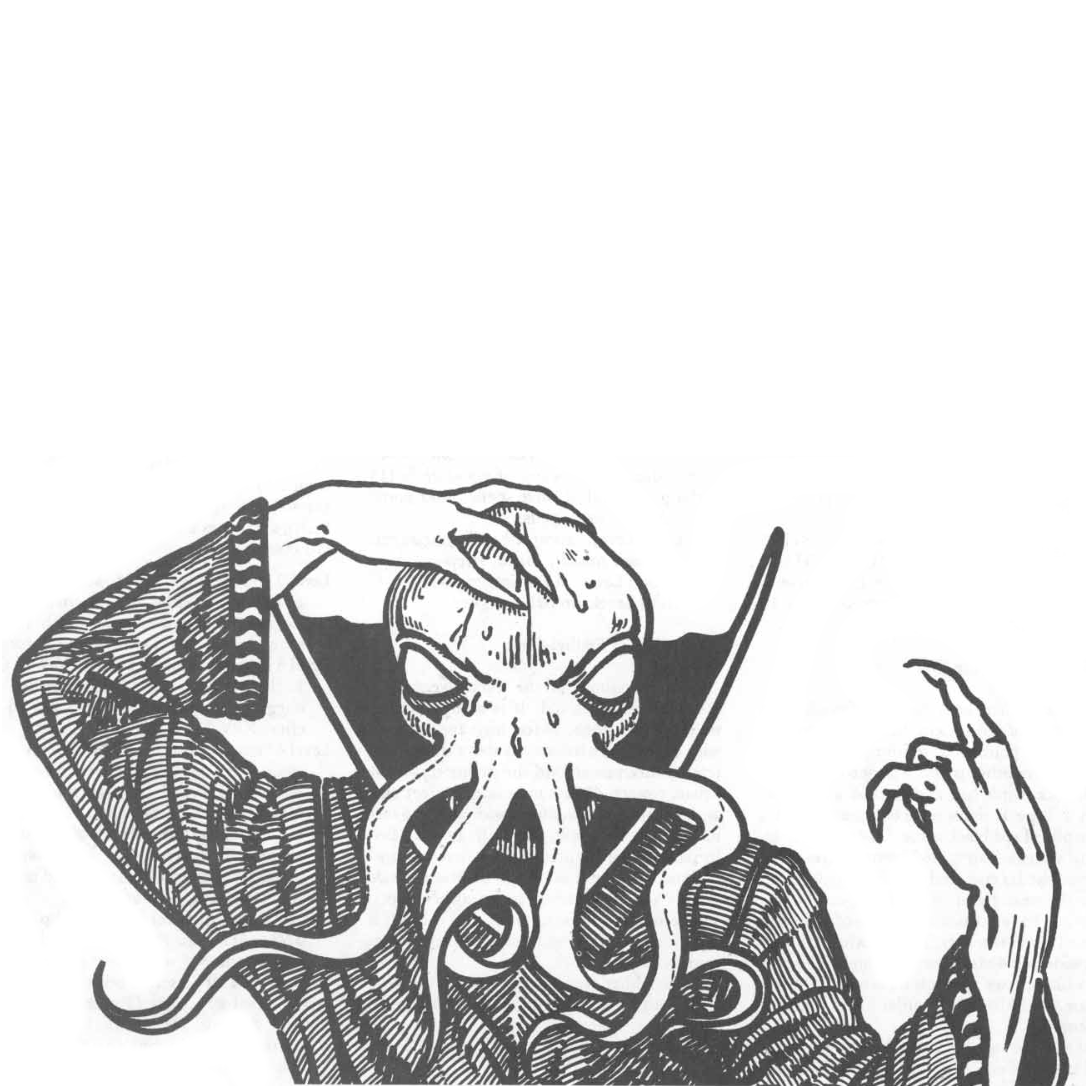
  • Another thing that makes Oracle / Seer / Diviner characters difficult to GM for is that you need to know things in advance, where the adventure leads to etc. As one whose GMing style leans heavily into Play To Find Out that sort of characters is kind of counter to it.

    That said it is highly dependent of what the player want out of such an archetype. If it is a flavour for how the character solves problems I’m all for that. Touching an item to get a vision/impression for something (adventure) related to it go ahead. That is not too different to other ways of investigating. But the player who wants those powers to get “quest markers” or to completely negate obstacles (“hurr durr I have foresight so I’ve seen the ambush”) gets hard noes from me.

    Also agreeing with @dumples@kbin.social, D&D 5e Divination wizards are very well made and the divination spells work well in those kind of worlds.


  • D&D is hard. Sure the core of it is straight forward but then things start to add up. It is a game that wants you to care about minutia. How far travelled, distance between two points, the height of dungeons ceilings, how long passed since that spell was cast, how much you ate yesterday. And it wants you to arbitrate spell interactions, players weird schemes and prepare a lot of stuff. Also it wants you to actually run the narrative. Some love this difficulty, find the intricacies challenging and desire to master it all.

    The good news is that the behemoth of D&D isn’t alone out there. Really lots of good stuff can be found. First problem is knowing what one want to find. Second is finding others that have similar taste to you. But it is doable and a good thing to do is ask for help. Because if it is something we like here it is to talk about ttrpgs. Getting us to shut up… better ask santa for a dragon.


  • Wrapped up a Torchbearer campaign about this time last year and now a long term player have taken up the mantle and is GMing some Burning Wheel.

    Did very little GM-ing. Just some sporadic Blades and a few sessions of Swords of the Serpentine. Like the core of Serpentine but they have added on too many auxiliary systems for me to enjoy it. It doesn’t really know what it want to be - light or complex.

    Gotten into OSR adventures. Have no liking to the systems but truly love the adventure designs. It is the openness of them that calls to me, an invitation “here is the situation go wild”. And they seem so plug-and-playable, and descriptions seldom last longer than a paragraph, and there are tables instead of words, and hooks are listed without fuzz. Am I smitten? Yes!

    As the year draws to a close I’m starting up my first campaign in my native Swedish - Drakar och Demoner. Will sound so incredibly geeky to do roleplaying in Swedish. Corny deluxe.


  • If the DM asks you you really want to do something look at their expression and do it anyway.

    If you want to do something really stupid, crazy or narrativly disruptive look towards your fellow players to get their consent. Then do it.

    The time to argue technicalities is outside of sessions to not waste precious gametime. Do it during sessions only if you are into that weird shit.

    The best way to get to use new character options is through DM bribes. In this case a sourcebook is recommended.

    If you help clean up afterwards you may get inspiration.


  • D8? D20/5 x d20/10

    Am I missing something here? Can this even generate 5 or 7?

    D20/5 gives [1…4] and D20/10 [1…2], of course assuming whole numbers. Where to get the factors for 5? 5 can be factored only as 5x1 or 1x5 and the 5 cannot be found either in d20/5 or d20/10. Same is true for 7.

    And I don’t see it happening either if we allow rational numbers. To get 5 we would get the following expressions
    5= d120/5 x d220/10 = d120 x d220/50
    or 250= d120 x d220
    And two d20 multiplied together cannot give us 250.

    Math baby?