- 4 Posts
- 11 Comments
Joined 3 years ago
Cake day: July 16th, 2023
You are not logged in. If you use a Fediverse account that is able to follow users, you can follow this user.

My background is in permaculture but there’s significant overlap between that and solarpunk. My point of view is that permaculture and/or solarpunk work at the individual level. They work even better at the household level, and even better at the community level, even better nationally, and best internationally.
You don’t have to change the whole world to be successful. You’re not responsible for the entire world, only your own actions. So be a part of the solution, lead by example and persuade others to do the same. But you’re not expected to carry 8 billion humans on your shoulders, all the other animals, the trees, the weight of all of the oceans, etc. People only believe this because it gets repeated incessantly but take a step back and realize how obvious it is that you can’t be expected to be personally responsible for basically all of existence. You’re not omnipotent. Let go of weird expectations that anyway are probably promoted by fossil fuel types to overwhelm people into inaction.
Be responsible for your own actions, be part of the solution, and let go of the rest.


 6·2 years ago
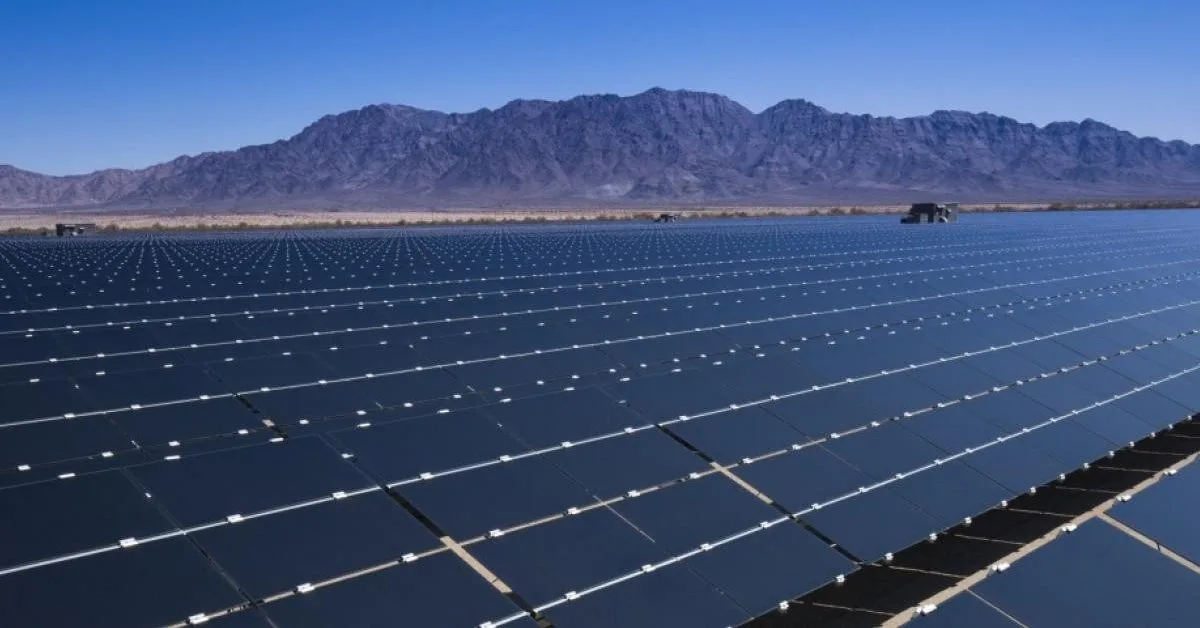
SunZia is a megaproject by almost any measure. Pattern executives estimate that SunZia will generate enough power for three million homes. That’s three times as much energy as what’s produced by the largest wind farm currently in operation, the 1-GW Great Prairie Wind project in Texas. There are only six power plants in the entire country with a larger listed capacity than 3.5 GW.
Wow!
I would love it if we could treat this as a competition, to see who can build the lowest carbon-cost electricity service. A region of India has a competition like this, where villages do earthworks projects for rainwater infiltration and reforestation. The result is massive positive change. The same competitive spirit could be extremely powerful if applied to energy generation.
 9·2 years ago
Yes!!!
Here’s a related, short video, from Brad Lancaster in Tucson, Arizona: How wall color can cool (or heat) you by over 25˚F (13˚C), & shade can cool you by over 45˚F (25˚C)
 4·2 years ago
We use a simple homemade compost toilet, saving 150kg of climate change emissions per person each year, and instead of creating sewage, we create compost.
Hence why I said to purify it, and I only mentioned propane in the context of cooking, which is virtually if not always off-grid, so no piping.
As an additional (future) option, I love the idea of creating biochar, capturing the resulting syngas, and purifying the syngas for use as a plug-and-play alternative to propane compatible with their existing cookware.
I think this is sound from ecological and social standpoints. Propane is basically a byproduct of fossil fuel refinement, and as that goes away, so too, will propane, leaving behind a ton of wasted cookware etc. including the embodied carbon in its manufacture. By replacing the propane with another gas that’s a byproduct of sequestration rather than fossil emissions, we save the embodied carbon and financially incentivize sequestration, while the people with cultural attachments to gas cooking can continue on.
You can ask him, or read his book. He’s spent decades working on water.
Have you installed and used rainwater harvesting and greywater systems? It sounds like you haven’t. They’re remarkably simple.
Doable but not necessarily with a lower impact.
According to Rainwater Harvesting for Drylands and Beyond (volume 1, 3rd edition) by Brad Lancaster, page 249, an example household doing water harvesting and reuse, saves between 80kWh and 97kWh per month and between 174 pounds (78.8kg) and 211 pounds (95.5kg) of CO2 emissions. That’s a huge win for rainwater harvesting and greywater.
Rooftop solar and wind also save a ton of water since traditional generation methods of burning fossil fuels need lots of water.
And according to the same book, page 240, here are some kWh/gallon ranges of various water sources:
- on-site rainwater: 0.0000 to 0.0007 kWh/gal
- on-site greywater: 0.0000 to 0.0002 kWh/gal
- groundwater: 0.0006 to 0.0020 kWh/gal
- avg utility water: 0.0011 to 0.0041 kWh/gal
- brackish groundwater: 0.0032 to 0.0379 kWh/gal
I agree but just want to add that at least some people in apartments and condos can still produce and use solar-generated electricity. Here’s a cool example:
Although I have rooftop solar producing around 200% of our usage annually, I was inspired by this story and have been increasingly using our offgrid LFP (LiFePO4 / lithium iron phosphate) backup batteries with solar panels to power certain things.
I think people in apartments would need rooftop access (ideally), equator-facing windows or a balcony, at the very least, for this to make ecological sense as there’s a carbon cost to manufacturing batteries and solar panels. But it’s doable and some people are doing it!
Here’s another:
Tucson, Arizona in the Sonoran Desert receives more rainfall annually than the amount of water sourced municipally. In other words, even in a desert city like Tucson, there’s no need to import water. We are wasteful not by nature but by habit, and that can be changed. Rainwater harvesting with thoughtful usage, mulching and locally-appropriate plants and greywater provide all the water necessary except in the most extreme environments such as Death Valley. But even in Death Valley a single family home could provide all its own water through the above if they were also doing solar distillation and reuse.
With proper management and cultural development, cities can provide all their own water and energy and a substantial portion of food.
I’m active in that community but agree there’s too much negativity there, and too much negativity in general. It seems to be improving over time, though.