image transcript:
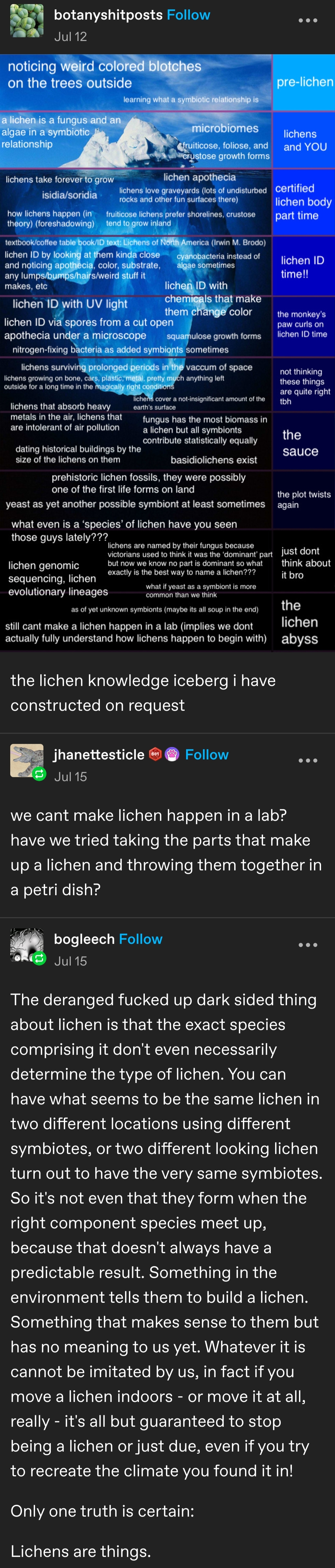
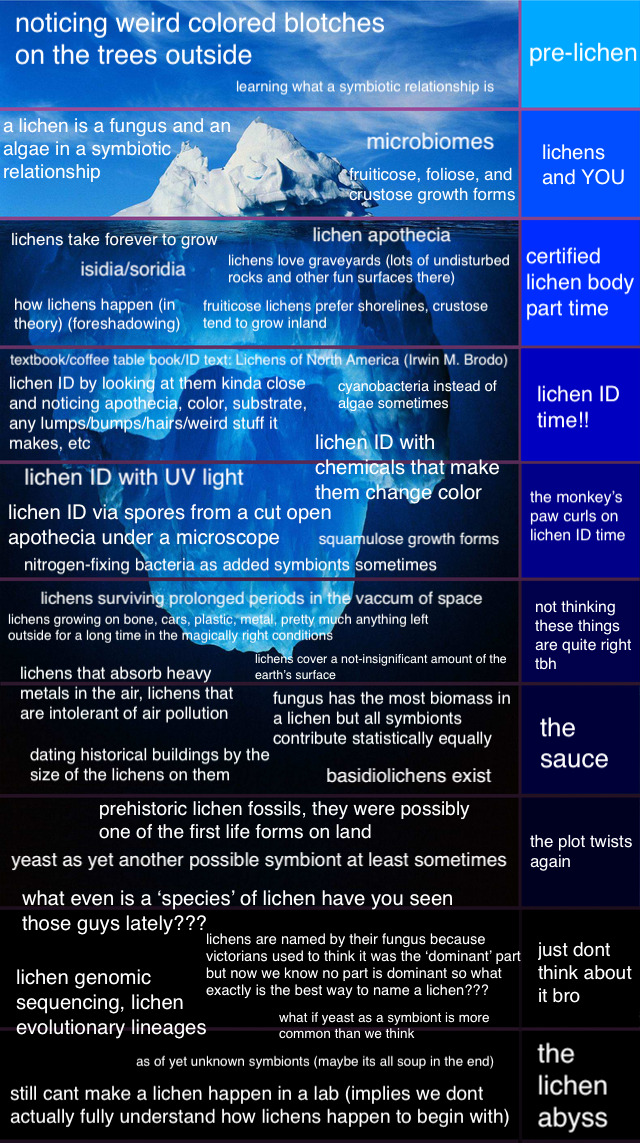
the lichen knowledge iceberg i have constructed on request.
jhanettesticle replies:
we cant make lichen happen in a lab? have we tried taking the parts that make up a lichen and throwing them together in a petri dish?
bogleech replies:
The deranged fucked up dark sided thing about lichen is that the exact species comprising it don’t even necessarily determine the type of lichen. You can have what seems to be the same lichen in two different locations using different symbiotes, or two different looking lichen turn out to have the very same symbiotes. So it’s not even that they form when the right component species meet up, because that doesn’t always have a predictable result. Something in the environment tells them to build a lichen. Something that makes sense to them but has no meaning to us yet. Whatever it is cannot be imitated by us, in fact if you move a lichen indoors - or move it at all, really - it’s all but guaranteed to stop being a lichen or just due, even if you try to recreate the climate you found it in!
Only one truth is certain:
Lichens are things.
end of transcript
reposted from tumblr: https://www.tumblr.com/bogleech/756047802259341312
You must log in or # to comment.
What the fuck is lichen
I’m no biologist, but I’m pretty sure that this photo I took a while back has a lot of lichen:
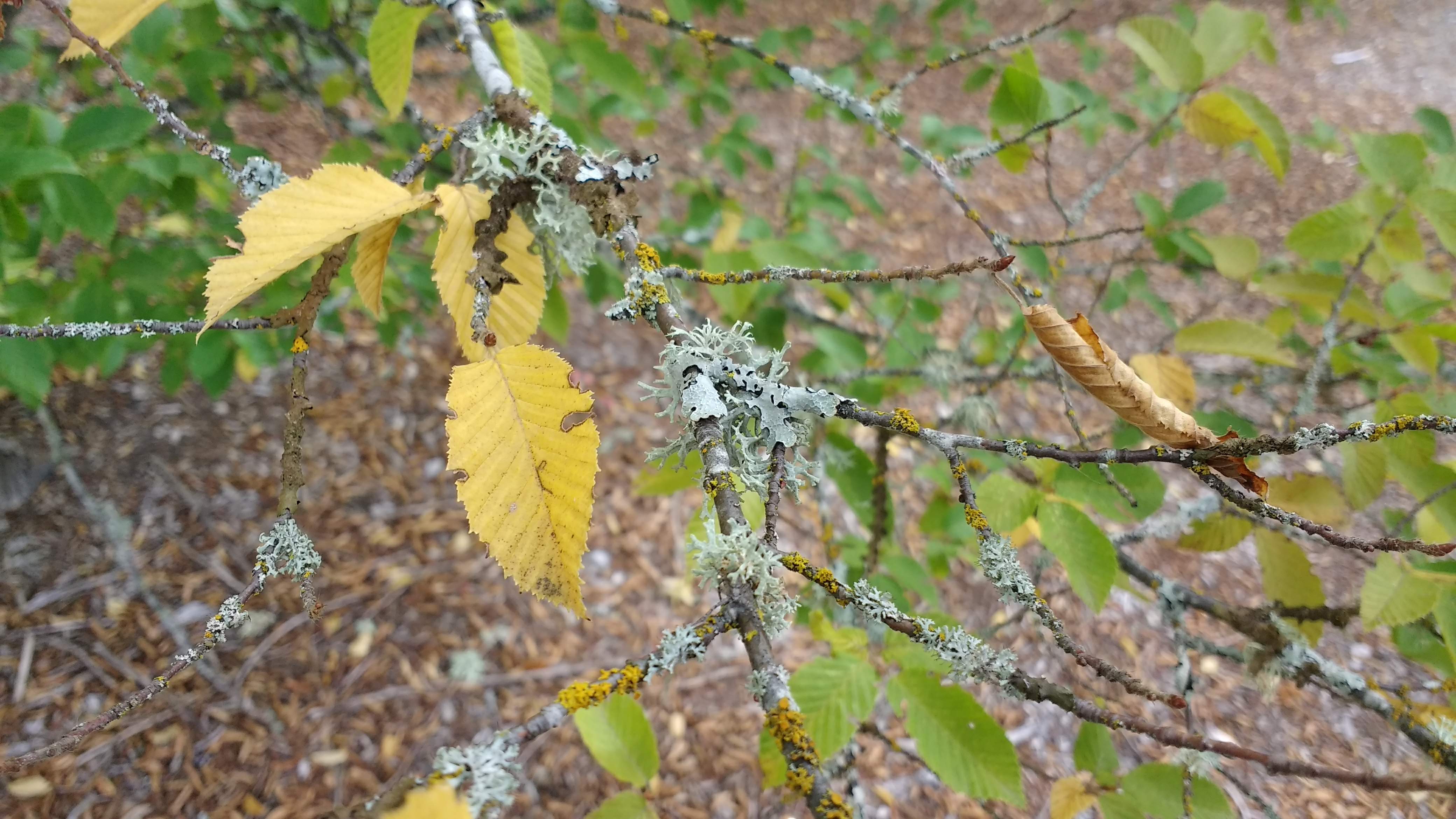
That flakey & coral-looking stuff growing on the branches should be lichen.
It’s a thing that grows on trees and rocks mostly, but can and does grow on basically anything in the goldilocks conditions. They feel like crispy moss if you touch them.
They thrive in graveyards…
*off screen* Me too!
The short answer: fungus and algae work together and create a multi-organism structure.
The medium answer: [this meme]
The long answer: [years of graduate school]
It’s the opposite of not lichen.
And that’s both a pithy retort, as well as an accurate reflection of the ultimate gist of the infographic lol
Lichen deez nuts
I would like to propose an addition to the Forbidden Knowledge list:
- Do not teach crabs how to read
- Do not tell any lichen that “red wunz go fasta”
For anyone else who was curious about lichens covering “a not insignificant amount” of the earth’s surface, a quick google tells me it’s about 7% (according to e.g. new york times, scientific american, etc)
Edit: oh and estimating the age of an exposed surface by lichen diameter is called lichenometry. I’m seeing stuff about it being used in geological contexts but it makes sense that it could work for old buildings too
We can’t even grow most bacteria in labs. It’s a pretty small subset that work with the traditional agar petri dish set up.