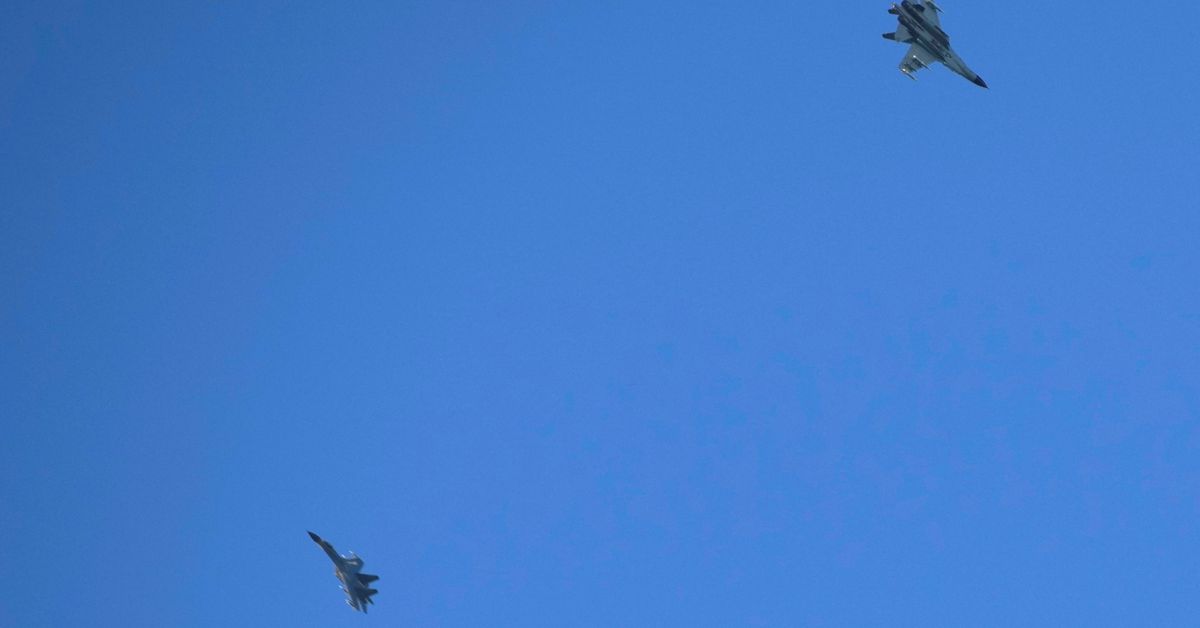
Ten Chinese air force aircraft entered Taiwan's air defence zone on Wednesday accompanying five Chinese warships engaged in "combat readiness" patrols, the island's defence ministry said, the second such incursion this week.
Thanks for answering and for trying to contextualize the answer as well. I think the latter in particular was very helpful. You are very much correct in your assertion that term limits are not a part of many democratic institutions, and I do not see any inherent issue with this. I imagine it might also depend on the particular mechanics and dynamics of the systems in question. Countries such as Germany and those with prime ministers often have a system of representation that allows for smaller political parties, which I think makes it harder for a single candidate to stay as head of state for a prolonged time (though I know of at least one case of this happening even if it isn’t necessarily a bad thing).
I did not know about the way you (to me) seem to choose representatives who then iteratively elects further candidates representing them. If my understanding is correct, then I would say that the first election seems to form the basis for the subsequent ones, which I think is a neat idea. However, that would also imply that how the first election is conducted is quite important for the composition of government. What limits are there to who can be a candidate in the first and second stages of the elections? I assume of course you had to make some simplifications, so I might be off track a bit here.


Thanks for answering and for trying to contextualize the answer as well. I think the latter in particular was very helpful. You are very much correct in your assertion that term limits are not a part of many democratic institutions, and I do not see any inherent issue with this. I imagine it might also depend on the particular mechanics and dynamics of the systems in question. Countries such as Germany and those with prime ministers often have a system of representation that allows for smaller political parties, which I think makes it harder for a single candidate to stay as head of state for a prolonged time (though I know of at least one case of this happening even if it isn’t necessarily a bad thing).
I did not know about the way you (to me) seem to choose representatives who then iteratively elects further candidates representing them. If my understanding is correct, then I would say that the first election seems to form the basis for the subsequent ones, which I think is a neat idea. However, that would also imply that how the first election is conducted is quite important for the composition of government. What limits are there to who can be a candidate in the first and second stages of the elections? I assume of course you had to make some simplifications, so I might be off track a bit here.